Divisions in Blackness
Written by Senam Okpattah
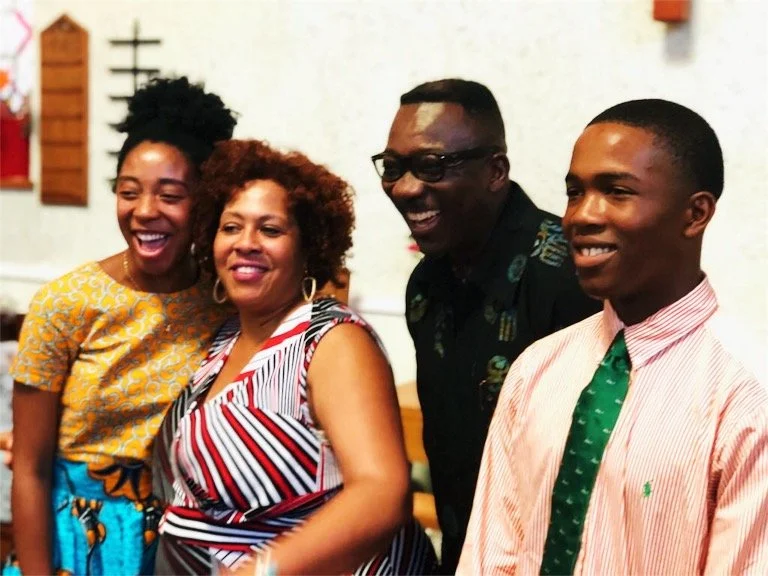
My name is Senam and it means “God’s gift”. I take great pride in my name because it is an emblem of my Ghanaian heritage. My father was born in Ghana and immigrated to the United States in the late 80’s. My mom is Black American and grew up in the Midwest, but has strong roots in the South. My parents met by chance but I am thankful they did because their union awarded me with two rich cultures that I am proud to call mine. Being both Ghanaian and African American has exposed me to the diversity of Blackness and enriched my understanding.
Although I cherish the duality of my identity, I feel that there is a divide between African and African American communities. I think it is safe to say that this chasm is a byproduct of the Atlantic slave trade and the system of chattel slavery that was instituted in the U.S. There seems to be a sort of “otherness” involved in the ways Africans and African Americans perceive one another. We do not bask in our shared origin, but rather, focus on our cultural differences.
I have felt the effects of this divide within my own life. I have been told that I am “not really African” because only one of my parents if from Africa, therefore, I have not had a “full” or “authentic” African upbringing. Others have also questioned my heritage and belittled my understanding of Ghanaian culture because I do not “look African”. Assertions like these from other African people left me feeling isolated and self-conscious because I could not help but question if these claims were true.
On the flip side, my Blackness has also been called into question by African Americans because I do not “act Black” or “talk Black”. I find these claims problematic, however, they have also made me question my authenticity as an African American person. I am not well-versed in Black colloquialisms, slang, or culture and my understanding of my Blackness is very much tied to my Ghanaian roots.
As a university student, I have participated in a lot of dialogues about the perceived divide between Africans and African Americans. African students, first-generation or otherwise, have shared narratives about being called “African Booty Scratchers” or ridiculed for their culture and language, often from African American peers. Although many of these stories stem from childhood, I think it is telling of a larger issue about African Americans not feeling like they are connected to Africa in any way and perceiving Africans as different because their own history is significantly framed by slavery. I have heard many of my African American peers lament about lacking identity and culture because they do not have the privilege of knowing where they come from. They have also expressed feeling judged by African peers for not having direct ties to Africa or knowledge of their heritage.
I decided to reach out to a few friends of mine that represent some of the perspectives that surround this issue. I asked each friend the same question: Do you believe there is a divide between African and African American people?
A friend from high school named Allemai is the daughter of an Ethiopian father and second-generation, Jamaican mother. Allemai explained, “…Because I’m half Ethiopian and half Jamaican and don’t speak Amharic, there have been people who kind of question my identification as an Ethiopian….It’s a really proud heritage which I love, it’s just that sometimes in that unity it can appear closed off to other people….I’ve actually had other Black people say to me, ‘oh you’re not Black, you’re African’ as kind of an explanation of why I don’t act stereotypically Black.”
A friend from college named Tamya expressed the divide she notices as an African American on our university campus. She stated, “Being at UMD (University of Maryland), where a large portion of the Black community is African, I feel like there is a disconnect, especially in our expressions of culture. African American kids don’t have that access to traditional clothing, food, and language because we don’t have direct roots to Africa due to slavery. I feel that some Africans who may be first or second generation have a bit of a superiority complex because of their connection to the culture that African Americans don’t have access to. On the flip side, I feel like a lot of African Americans think they have a leg up on Africans because they are more ‘modern’ or ‘refined’ which is backward thinking. I wish that there was more of an equal sharing of ideas and cultures between Africans and African Americans…we also can’t forget the many similarities and common ground we have.”
I spoke to another university friend named Christine who is a first-generation Nigerian. She stated, “I do think that there appears to be a division in the Black diaspora. But this said division is rooted in anti-Black ignorance and stereotypes on all sides. Furthermore, social media has exacerbated the division by making ignorant statements more visible. Part of amending the division starts with the acknowledgment that the Black experience and history is not a monolith.”
Christine is right in recognizing that Black history and the Black experience is not a monolith. Given this, we as Black people have a responsibility to educate ourselves and each other on the diversity of Blackness. Engaging in dialogue and sharing the treasures of our cultures is necessary in creating unity and bridging the divide. Slavery deprived Black people of their identities and it would be a shame to allow the remnants of slavery to persist by sustaining divisions between Africans and African Americans.